As 2025 comes to an end and we finish the first oof the two-year 119th Congress and the first year of the new administration, the AAO Advocacy Team and Cozen O’Connor Public Strategies want to share updates and actions on AAO federal level policy priorities with AAO members (see below). And of course, we want to thank you for your continued advocacy support.
In 2026, we will continue to work closely with our Organized Dentistry Coalition (ODC) on shared priorities. Your grassroots engagement makes all the difference for our advocacy work and influence.
Here are ways to take action right now to support AAO Advocacy:
- Take the AAO Public Policy Survey to help inform our policy work for the year ahead: https://survey.alchemer.com/s3/8574463/2025-AAO-Public-Policy-Survey-5th-Annual
- Make a final 2025 AAOPAC contribution at AAOPAC.org and consider participating in the AAO 2026 Professional Advocacy Conference in Washington, DC (March 17-18).
The Ensuring Lasting Smiles Act (ELSA) – H.R. 3277/ S. 1677
ELSA would require private group and individual health plans to cover medically necessary services for individuals born with congenital anomalies (focusing on those affecting the eyes, ears, teeth, mouth, or jaw anomalies). The bill is intended to close a longstanding coverage gap where patients (often children) face insurance denials for reconstructive, dental, or orthodontic procedures that are medically necessary but deemed cosmetic by the insurer.
ELSA aims to standardize coverage across insurers and reduce reliance on appeals or out-of-pocket payment. This legislation has strong support from patient advocacy and clinical professional groups and aligns with broader policy efforts around coverage consistency and medically necessary treatment.
The bill mandates that insurers provide inpatient and outpatient coverage for services needed to restore function stemming from congenital anomalies, explicitly including dental, orthodontic, and prosthetic treatments. Cosmetic-only procedures remain excluded. Earlier versions passed the House in the 117th Congress but stalled in the Senate. In the 119th Congress, the House (H.R. 3277) and Senate (S. 1677) versions are currently at the committee referral stage. The House version has 108 bipartisan cosponsors, and the Senate version has 34 bipartisan cosponsors.
Resident Education Deferred Interest (REDI) Act – H.R.2028/ S.942
The REDI Act would amend the Higher Education Act of 1965 to allow internships or residency programs to defer federal student loan payments without interest accruing during their training period. The bill addresses high debt burdens for early-career physicians and dentists who often enter residency with significant loan debt and limited stipends. This financial pressure can discourage entry into practices in underserved areas.
By pausing both payments and interest accumulation during residency, the REDI Act aims to broaden access to medical and dental professions, support workforce distribution, and ultimately improve provider availability in rural and shortage regions. The legislation adds medical and dental residencies and internships as eligible periods for deferment without interest growth.
In the 119th Congress, both the House (H.R. 2028) and Senate (S. 942) versions are at the committee referral stage. The House version has 62 bipartisan cosponsors and the Senate version has 9 bipartisan cosponsors.
Of note, we were close to seeing parts of REDI advance through reconciliation earlier this year, as a version was originally included as a provision in the House’s One Big Beautiful Bill Act (OBBBA). This provision would have capped the amount of time that internships or residency programs could defer federal student loan payments without interest accruing during the training period at four years. However, this provision was ultimately not included in the final version of the legislation that was signed into law in July 2025. Nonetheless, it was a promising development to see the House attempt to advance the REDI policies.
ERISA Reform Bills: The WAIVER Act
The WAIVER Act would allow states to petition the U.S. Department of Labor for a waiver to limit the scope of ERISA preemption, helping to return the right to regulate health coverage to the states. This legislation is still under development and has not yet been formally introduced, but it is on our radar screen.
ERISA Reform Bills: The Improving Dental Administration Act
The WAIVER Act would extend state insurance law protections to patients receiving their coverage through a plan that is self-funded by an employer. This would close the “ERISA preemption loophole” through ensuring that state laws applying to fully insured dental plans would also apply to self-funded dental coverage.
This legislation is still under development and has not yet been formally introduced.
In 2024, the AAO joined the American Dental Association’s (ADA) Supreme Court brief on a key ERISA case, advocating for stronger protections for dental coverage under health plans. This brief aimed to address concerns about the limitations and exclusions affecting orthodontic care in ERISA-regulated plans.
Direct-to-Consumer Medical Products – Patient Health and Safety Advocacy
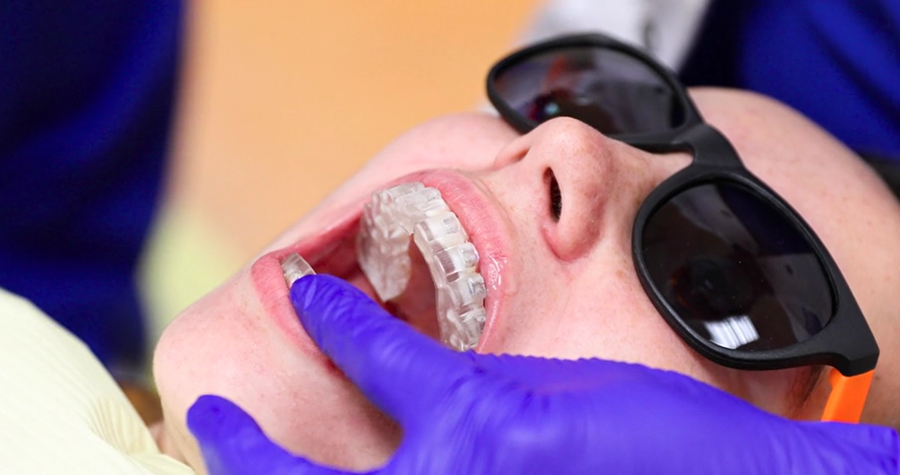
AAO continues to lead on this important patient health and safety issue and has actively engaged the U.S. Food and Drug Administration (FDA) in addressing the harms associated with direct-to-consumer (DTC) orthodontic treatment models. In September 2025, an AAO delegation led by AAO President Steve Siegel met with senior FDA leadership officials in Washington, DC to share first-hand perspectives and research regarding the dangers of unsupervised DTC orthodontic treatment and the need for the FDA to pursue bad actors within this space. AAO has subsequently been in touch with leaders at the FDA on the subject many times and remains in communication with the FDA.
The AAO Advocacy team has also been working for many months with the Cozen O’Connor Public Strategies team on federal teledentistry legislation that is nearing readiness for introduction and is similar to teledentistry legislation AAO has been successfully leading on at the state level. We look forward to prioritizing this legislation for our Capitol Hill meetings during the AAO 2026 Professional Advocacy Conference.
H-1B Visa Fees
As of September 21, employers must pay a one-time $100,000 supplemental fee for H-1B petitions filed for beneficiaries who are outside the United States and not currently in valid H-1B status. Separately, having begun October 1st, the OBBBA imposes a non-waivable $250 Visa Integrity Fee on most nonimmigrant visa issuances, including H-1B. These changes apply in addition to standard H-1B filing costs and were introduced through executive action and statute rather than standalone legislation, reflecting an administrative push to deter perceived overuse of foreign labor pathways.
For AAO members, these fee changes can have substantial implications. Practices that plan to bring in specialists from abroad using the H-1B pathway could face prohibitive cost increases. The $100,000 fee does not apply when hiring an individual already in the U.S. in valid H-1B status through a change of employer or extension, which may preserve utility for in-country recruitment.
The heightened cost burden is expected to limit reliance on foreign-trained clinicians entering directly from abroad, potentially narrowing specialist availability, raising recruitment competition domestically, and prompting exploration of alternative immigration channels. Many medical professionals are concerned about these proposals and have been advocating for exemptions for medical professionals or lifting of these requirements. To date though, we have not seen the Administration grant these exemptions or loosen the requirements.
The takeaway is that the AAO is not launching a campaign to promote foreign hiring within private orthodontic practices. Rather, we are aligning with broader medical and dental professional organizations in raising concerns about an abrupt, six-figure fee increase that could harm both academic programs and a small subset of member practices that depend on H-1B physicians or dentists (most of whom trained in the United States).
The AAO joined the ODC submitting a letter last month expressing concerns to the U.S. Citizenship and Immigration Services Director. Click here to read the letter and learn more.
Student Loan Debt Concerns
Given congressional Republican and the Trump Administration’s general view that the costs of education are skyrocketing, in part, due to federal funding and lending in student loans; as well as concern over the certain employers who are participating in the Public Service Loan Forgiveness program, we have seen significant interest in and activity around student loan reform this year.
PSLF Final Rule
On October 30, the U.S. Department of Education announced a final rule revising the Public Service Loan Forgiveness (PSLF) program to clarify which employers qualify for participation. The rule amends the definition of a “qualifying employer” to exclude organizations that engage in unlawful activities deemed to have a substantial illegal purpose, such as supporting terrorism or aiding and abetting illegal immigration.
This action follows President Trump’s March 2025 Executive Order directing the Department to ensure that PSLF benefits are limited to organizations that do not use federal funds to advance unlawful objectives. The final rule is scheduled to take effect on July 1, 2026. Multiple state Attorneys General and non-profits have filed suit against the administration over this rule.
Direct Plus Rulemaking
Under changes required by the OBBBA, the Department of Education initiated Title IV negotiated rulemaking to restructure Direct PLUS loan eligibility and impose new federal borrowing caps. The proposal would eliminate Graduate PLUS loans for new borrowers beginning July 1, 2026, replacing them with a $20,500 annual and $100,000 aggregate borrowing limit under Direct Unsubsidized Loans for graduate students, and a $50,000 annual and $200,000 aggregate limit for professional degree students (including orthodontists).
For Parent PLUS borrowers, annual loan availability would be capped at $20,000 per dependent with a $65,000 lifetime maximum. Negotiated rulemaking began in fall 2025 to implement these changes and address transition mechanics. As of November 24, 2025, no final regulatory text has been issued. Concerns have been raised that the removal of Graduate PLUS loans could limit access to advanced degree programs, particularly in high-cost fields such as dentistry and orthodontics.
AAO Vice President of Advocacy Nathan Mick noted, “The AAO is actively engaging with lawmakers at both the federal and state levels to pursue meaningful solutions to the student loan debt challenges facing AAO members. Through our strong collaboration with the Organized Dentistry Coalition and a broader alliance of affected stakeholders, we are working hard to communicate and address the significant impacts of the OBBBA on student debt.
“Mobilizing AAO member voices will remain vital to our advocacy efforts,” Mr. Mick continued. “While there is plenty of work ahead, addressing student debt continues to be a long-standing priority for AAO. The strategic influence, relationships, and advocacy power the AAO brings to the table have never been more important. In fact, the student loan debt setbacks introduced in the OBBBA can help galvanize our voice and offer a renewed opportunity to amplify our message to Congress. The AAO remains well-positioned on Capitol Hill with a strong and effective advocacy voice for AAO members, and we will continue working relentlessly to advance our evidence-based priorities.”
To support members facing debt challenges, the AAO launched a dynamic student debt microsite last spring, featuring federal and state resources as well as information on debt relief programs where orthodontists are specifically eligible.
At the state level this year, AAO helped secure $6 million in the Florida state budget recently signed by Governor Ron DeSantis. This funding will reimburse up to $250,000 in student loan debt for orthodontists who meet specific requirements in medically underserved areas. Details on this Florida initiative, along with updates related to the OBBBA, will continue to be posted on the AAO student loan debt microsite linked above.
CMS Chief Dental Officer Vacancy
We learned earlier this month that Dr. Natalia Chalmers, who has been a great friend to the AAO, will leave her role as the Chief Dental Officer at the Centers for Medicare and Medicaid Services for a new opportunity. We are grateful to Dr. Chalmers for her public service and leadership at CMS. The AAO is focused now in collaboration with the ODC advocating to maintain the position of Chief Dental Officer at CMS. Please click here to read the recent ODC letter signed by AAO to CMS on this issue.
We need your help now to ensure AAOPAC can continue fueling AAO advocacy success!
The AAO continues to support champions of its legislative priorities in a bipartisan and bicameral fashion through its political action committee (AAOPAC). As the AAO continues advancing our policy priorities in Washington, D.C., and across the states, please consider supporting AAO advocacy efforts by making a contribution in honor of the AAO’s 125th anniversary at AAOPAC.org (it can take less than two minutes using the email address associated with your AAO membership).
Your voice and grassroots engagement make a real difference. Contributions of any amount are appreciated and help ensure the AAO’s continued success in advancing our shared priorities.