Student Loan Reform
Easing the burden of student loan debt.
Becoming an orthodontist requires over a decade of post-secondary education, with the average orthodontic resident graduating with a staggering $567,000 in student loan debt. This debt influences where future orthodontists can choose to practice, with most opting for cities or suburbs in order to pay down their loans faster.
To address this critical issue, the American Association of Orthodontists (AAO) has developed a suite of resources to support colleagues, advocates, policymakers, and residents exploring student loan forgiveness programs and policy solutions.

Student Loan Debt for Orthodontists
The burden of student loan debt shapes where orthodontists practice, limits their ability to buy or start practices, and reduces the number of orthodontists pursuing careers as educators. Addressing these financial challenges is a top AAO priority as we support our members and strengthen the future of dental care in the U.S.

State Specific Resources: Advocacy in Action
AAO is committed to expanding student loan repayment opportunities through state-specific advocacy efforts.
*As more applications processes are available, additional states will be added.
The Cost of Becoming an Orthodontist
Budur Moctezuma’s journey to becoming an orthodontist is one of dedication, but also significant financial sacrifice. The weight of student loan debt is something many dental students and orthodontic residents carry as they enter the profession. Her story highlights why meaningful solutions are needed now. The AAO is working to raise awareness and advocate for change.
“When I was in my orthodontic program, my interest was suspended for six months after graduation. So that really helped me know what I was borrowing. Now, interest accrues while students are in dental school and through their orthodontic residency, so they don’t know what they owe until they are done. That adds stress and uncertainty. I see the toll debt takes on my students.”
“I knew early on that I wanted to go the dental route and into orthodontics, and I knew that would be expensive. I tried to make choices that made the most sense financially—as I get out, it will be hard for me to open my own practice. I do get a stipend in our hospital system, but I still have a massive amount of debt from dental school alone. Everyone deserves a beautiful smile and a healthy bite, but it is a huge toll for residents that ends up dictating where they can practice after graduation.”

Policy Solutions
The AAO advocates for reasonable, actionable solutions to ease the burden of student debt, such as:
- The Resident Education Deferred Interest Act (REDI Act), which allows medical and dental residents to defer payments on their federal student loans—and delay the point at which interest begins to accrue—until after completing their residency.
- The Student Loan Refinancing and Recalculation Act, which would provide a chance for borrowers to refinance their federal student loans when interest rates are lower. It would also eliminate loan origination fees and allow dental residents to defer payments until after completing their residency programs and it would delay the accrual of interest for many low- and middle-income borrowers while they are in school.
How Student Debt Impacts Access to Orthodontic Care
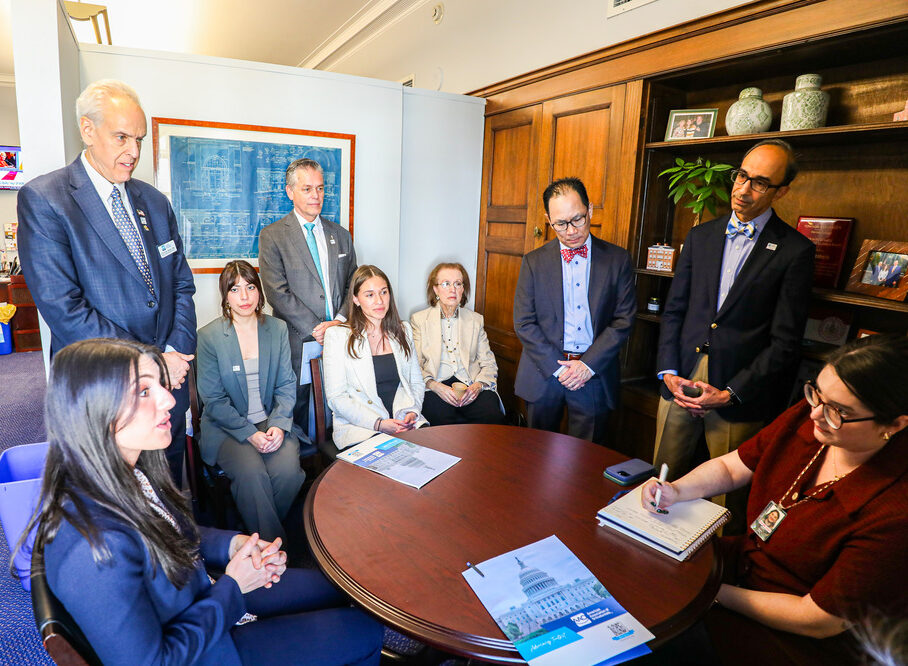
Dr. Petrich sheds light on a critical but often overlooked issue: how the burden of student debt affects access to care in underserved communities.
He highlights Florida’s forward-thinking expansion of the Dental Student Loan Repayment Program—a bipartisan effort that is already making the state more attractive to young providers eager to serve where the need is greatest.
Southwest Florida lawmakers were among the key champions behind this initiative.
Financial Management Presentation for Residents
Designed to give you the tools to plan for your financial future and orthodontic career. In this 90-minute session, you’ll learn about managing student loans, preparing for practice ownership, protecting your financial well-being, and planning for retirement.
Sign up for this or other AAO Resident Presentations
A Huge Win for Florida Orthodontic Residents
The AAO successfully advocated for continued funding of the Dental Student Loan Repayment Program. This $6 million allocation supports orthodontists serving underserved communities by providing up to $250,000 in loan repayment over five years.

Why the One Big Beautiful Bill Act Matters to Residents
The Act significantly changes federal student loans, affecting future orthodontists, current residents, dental students, and members supporting children in professional education.
Repayment & Forgiveness Options for Residents
The AAO has gathered these resources related to federally funded repayment and forgiveness options for residents. We encourage you to explore these publicly available materials and visit the original sources linked within for the most current and accurate updates.
Reduce fees and rates for all future federal borrowers.
Currently, federal student loan interest rates are tied to the 10-year U.S. Treasury note, with a fixed margin added—2.05% for Undergraduate Direct Loans, 3.60% for Graduate Direct Loans, and 4.60% for Direct PLUS Loans. Origination fees are also charged: approximately 1.057% for Stafford Loans and 4.228% for PLUS Loans, as of the 2024–2025 academic year. Please note that interest rates are reset annually on July 1 and can vary from year to year based on market conditions.
We support reducing the added interest margins on all federal Direct Loans and eliminating origination fees altogether. These changes would be especially beneficial for orthodontic students, who are typically not paid during residency and often borrow heavily to finance the approximately 10 to 11 years of higher education required to complete college, dental school, and a specialized orthodontic residency.

How can you help?
Contribute to AAOPAC
The AAO Political Action Committee ensures orthodontists’ voices are heard in the federal government.
Spread the Word
Orthodontic residents face unique challenges compared to their medical peers, impacting access to quality care. Share this video on the importance of advocating for solutions.
Contribute to AAOPAC
The AAO Political Action Committee ensures orthodontists’ voices are heard in the federal government.
Spread the Word
Orthodontic residents face unique challenges compared to their medical peers, impacting access to quality care. Watch this video to learn how you can advocate for solutions
REDI Act
Join us here to take action and make your voice heard as we add co-sponsors to this valuable, bi-partisan federal legislation which provides interest loan deferment for student loans while in orthodontic residency.

Navigate Your Student Loans with Confidence
SoFi offers student loan refinancing for AAO members with a 0.25% rate discount.
Latest News
View All News >