The Challenge
Student loan debt remains one of the most pressing challenges facing current and future orthodontists, and recent federal policy changes are increasing the urgency. Orthodontists complete 10 to 11 years of postsecondary education, often financing their dental education and specialty training through significant borrowing. Today, orthodontic residents graduate with an average of $567,000 in student loan debt, among the highest levels in healthcare.
Beginning July 1, new federal loan caps will significantly alter how orthodontic residents finance their education, likely creating new barriers for those reliant on loans to enter the orthodontic specialty, and setting in motion potential access to quality care challenges as new orthodontists gravitate toward higher income markets to manage repayment, rather than rural or medically underserved areas where they may prefer to practice.
Federal Advocacy and Engagement
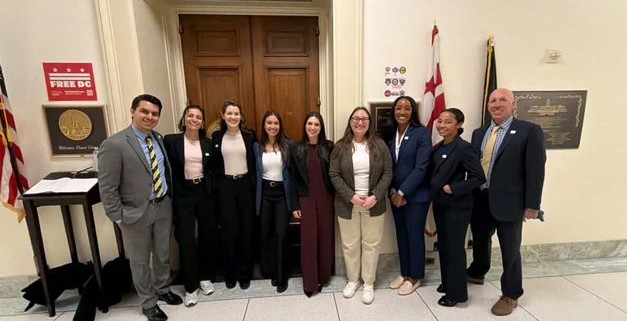
At last month’s AAO Professional Advocacy Conference in Washington, D.C., AAO members, including over 40 residents from across the country, engaged directly with Members of Congress and staff on AAO policy priorities — including the growing impact of student loan debt. AAO leaders met with more than 60 Congressional offices to share concerns about recent federal changes, including the elimination of Graduate PLUS loans, new borrowing caps, and increased reliance on private lending.
AAO also supported comments submitted to the U.S. Department of Education advocating for delayed implementation of the new federal student loan caps beyond the July 2026 effective date, encouraging a more measured and workable timeline to avoid unnecessary disruption for students, institutions, and the healthcare workforce pipeline.
“The AAO is actively engaging with lawmakers at both the federal and state levels to pursue meaningful solutions to the student loan debt challenges facing our members and future orthodontists,” said Nathan Mick, AAO Vice President of Advocacy. “These changes present real challenges, but also an opportunity to reinforce access to education and strengthen the orthodontic workforce.”
Learn More about Student Loan Debt Challenges and AAO Strategy in Our One-Pager
Building Relationships and Advancing the Dialogue
At the Professional Advocacy Conference, the AAO welcomed Assistant Secretary for Postsecondary Education at the U.S. Department of Education David Barker, providing an opportunity to strengthen relationships and share perspectives directly on these issues.
Florida Loan Repayment Program Offers a Potential Solution
In Florida, AAO advocacy helped secure $6 million last year in the state budget for the dental student loan repayment program. The FRAME program provides up to $250,000 in loan repayment for orthodontists practicing in medically underserved areas and supports access to care for patients across the state. Dental applications are being accepted now through May 31, 2026.
More details can be found at the following website, and orthodontists are eligible: AAO supported Florida Dental Student Loan Repayment Program
A Second Solution: Maryland Loan Repayment Opportunity
In Maryland, applications are currently being accepted for the Maryland Dent-Care Loan Assistance Repayment Program, which provides loan repayment support for dentists, including orthodontists, who serve Medicaid populations in eligible practice settings.
Applications are due by July 31, 2026. More details can be found here: Orthodontist Medicaid providers can access student loan repayment support in Maryland.
Listening to Future Orthodontists
AAO is also engaging directly with future orthodontists on this issue. In March, AAO Vice President of Advocacy Nathan Mick met with the UCLA dental student orthodontic study club last month to listen and learn from prospective orthodontic residents. The discussion focused on the financial realities of specialization and how new federal loan caps may impact their ability to pursue the specialty. Students shared candid perspectives on rising debt levels, uncertainty around financing options, and the potential barriers these changes may create for entering orthodontics.
AAO General Counsel Adam Braundmeier, AAO Staff Counsel Dan Ta, and AAO CEO Trey Lawrence are delivering a record number of AAO Resident Legal Courses this year, covering not only the legal aspects of practicing orthodontics, but also engaging residents in conversations about real-world student loan debt challenges.
The AAO Advocacy team also maintains a strong presence at GORP (Graduate Orthodontic Residency Program) each year to connect with residents and better understand their experiences securing loans, planning for practice ownership, and managing finances while carrying significant student loan debt.
These conversations help inform AAO advocacy as we work to ensure continued access to specialty training and care. A video from that discussion features UCLA dental student Budur Moctezuma, who speaks directly about the challenges of pursuing orthodontic specialization under current and proposed student loan policies:
Budur Moctezuma shares her story
Member Resources
To support members navigating these challenges, AAO launched a student loan debt microsite last year with federal and state resources, repayment information, and updates on available programs: AAOinfo.org/StudentDebt.
Why This Matters
Without thoughtful policy solutions, new federal borrowing caps may reduce access to orthodontic specialty training, limit workforce opportunities, and disproportionately impact residents who rely most on student loans. Orthodontists are small business owners, healthcare providers, and essential contributors to their communities. Ensuring access to education and sustainable financing pathways is critical to the future of the specialty and to patient access to high quality care.
AAO’s Ongoing Commitment
AAO will continue to advocate for policies and holistic student loan debt solutions that reflect the realities of healthcare training, support access to education, and strengthen the orthodontic workforce.