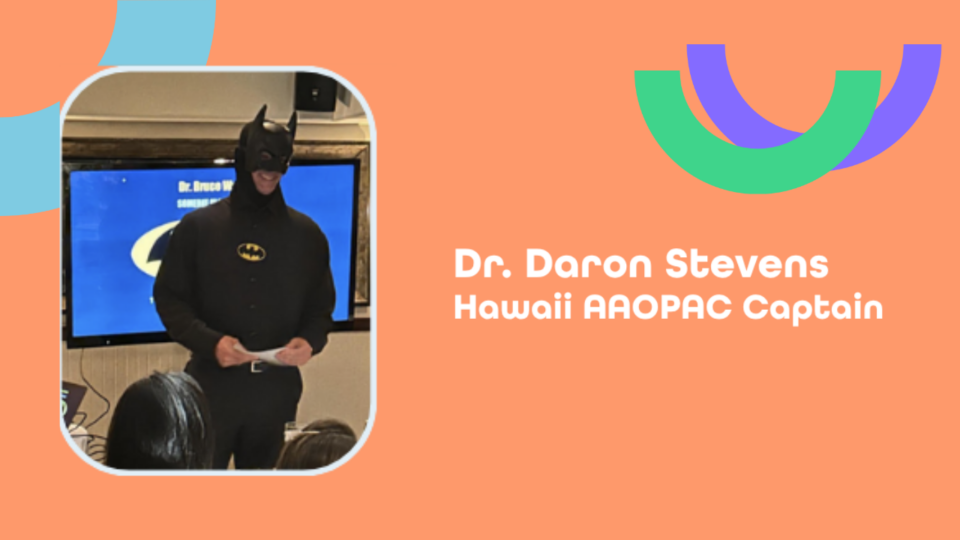
A Batman costume, a personalized Bat Signal, and a compelling message about AAO advocacy helped propel Hawaii into the number one spot for participation rate on the AAOPAC State Contribution Tracker, already reaching 64.3% of its annual contributor goal.
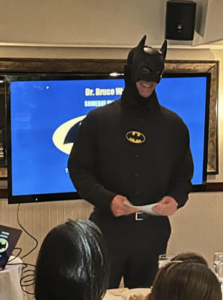
Behind the mask was Dr. Daron Stevens, Hawaii’s AAOPAC Captain in the National Advocacy Network, who brought an unconventional approach to an October 15 Hawaii Society of Orthodontists meeting. His goal was to show colleagues how AAO advocates for the specialty, often behind the scenes, and inspire them to support AAOPAC.
The idea began when Dr. Stevens learned that AAO attorney Dan Ta had been monitoring Hawaii Dental Board meetings remotely from St. Louis, particularly discussions concerning the use of synchronous video examinations for dental hygiene services provided under general supervision in public health settings. It was a local example of the AAO’s broader advocacy work on behalf of its members and underscores the importance of the National Advocacy Network. Together, AAO staff and volunteer advocates monitor and engage with policymakers across the United States and Canada to identify proposals that could affect orthodontists and their patients.
“Someone [at the AAO] in Missouri was watching our dental board. I live here. I certainly was not,” Dr. Stevens recalled.
For Dr. Stevens, that realization illustrated a valuable benefit of AAO membership. To bring that message to life, Dr. Stevens distributed personalized place cards featuring a Batman logo and QR code, then donned a Batman mask to deliver his presentation in character.
“The AAO is like our personal Batman—with MEETING minutes,” he told colleagues.
Dr. Stevens highlighted AAO advocacy priorities, including responsible teledentistry, insurance coverage for medically necessary treatment of congenital conditions, and student loan reform. He also explained how AAOPAC supports bipartisan federal candidates aligned with AAO’s legislative priorities.
Although is retired from his practice, Dr. Stevens shared that he continues to support AAOPAC because he cares about the future of the profession. He encouraged colleagues to consider contributing as well, emphasizing that participation and contribution amounts are voluntary.
Then came the Bat Signal. A QR code appeared on the screen,
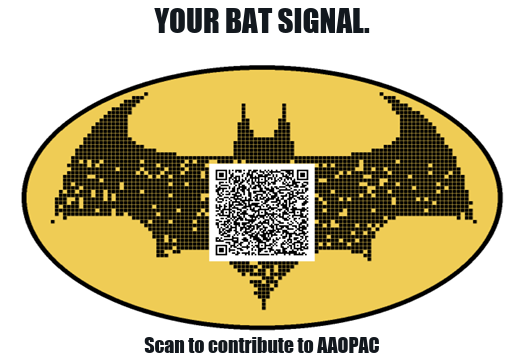
matching the one inside each attendee’s place card. Dr. Stevens walked colleagues through the contribution process while making his own contribution.
“The mask got their attention; the examples of what [the AAO Advocacy team does in collaboration with the AAO National Advocacy Network] gave them a reason to contribute,” he said.
The resulting increase in contributions demonstrated how a personal approach, paired with a clear explanation of AAO’s advocacy efforts, can inspire members to get involved.
The AAO continues to expand its National Advocacy Network across the U.S. and Canada. If you are interested in learning more about how you can get involved, please reach out to AAO Grassroots and Digital Advocacy Specialist Kim VanVeen to start the conversation: [email protected].
See how your state is progressing toward its annual AAOPAC contributor goal on the AAOPAC State Contribution Tracker.
The AAOPAC Race to 10 challenge brings AAO’s eight Constituent Regions together in a friendly competition to reach 10% member participation in AAOPAC giving. The goal is simple: Encourage more orthodontists to support advocacy efforts that protect our specialty, your practice, and your patients.
Every contribution, large or small, counts toward your region’s participation rate and helps strengthen our profession’s collective voice.