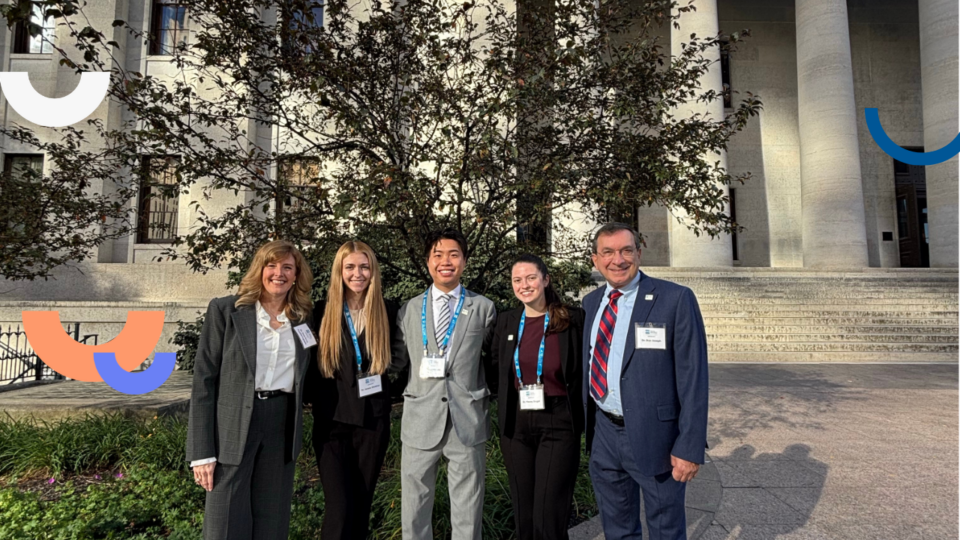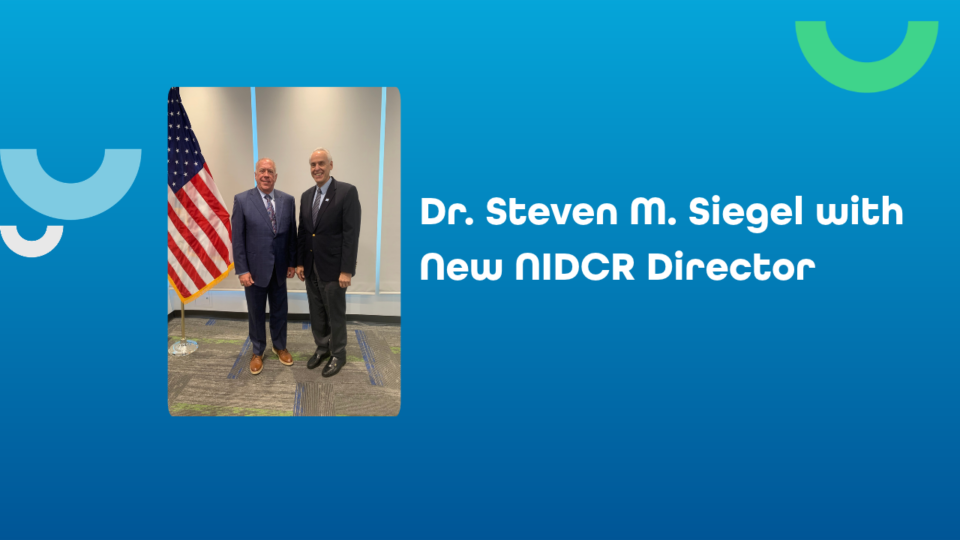
AAO Immediate Past President and current Maryland State Regulatory Captain for the AAO National Advocacy Network, Dr. Steven M. Siegel, represented the specialty at an October 26 meeting with Dr. Jonathan E. Burke, the new director of the National Institute of Dental and Craniofacial Research (NIDCR), part of the National Institutes of Health (NIH).
The meeting brought together leaders from dental and oral health organizations to discuss priorities and opportunities for collaboration. Dr. Siegel spoke individually with Dr. Burke before addressing the broader group, highlighting recent AAO advocacy accomplishments, ongoing efforts to strengthen patient protections, and research priorities affecting orthodontists and their patients.
FDA Guidance Reflects Years of AAO Patient Safety Advocacy
Among the developments Dr. Siegel highlighted was the FDA’s recently published consumer guidance on clear aligners, a significant milestone following nearly a decade of sustained AAO advocacy. The guidance reinforces the importance of in-person examinations and ongoing professional supervision, reflecting patient safety principles the AAO and its members have consistently advanced.
The new resources followed years of strategic engagement by AAO Advocacy, working with volunteer leaders, members, and federal policy partners. Beginning in 2024, AAO delegations met directly with FDA leadership to share concerns about patient complications associated with direct-to-consumer orthodontic treatment without appropriate clinical oversight.
In September 2025, an AAO delegation led by Dr. Siegel presented FDA officials with a letter signed by 1,745 AAO members who had encountered patients experiencing complications following direct-to-consumer treatment. The delegation also shared an AAO analysis of thousands of clinician and patient adverse event reports in the FDA’s Manufacturer and User Facility Device Experience (MAUDE) Database. AAO representatives continued those discussions with FDA leadership during the 2026 Professional Advocacy Conference.
In announcing the new consumer resources, FDA leadership acknowledged the AAO’s outreach and ongoing patient advocacy. The development illustrates how sustained regulatory engagement, clinical evidence, and grassroots advocacy led by AAO members can help elevate orthodontic patient safety concerns at the federal level.
Read more about the AAO’s advocacy efforts and the FDA guidance.
Building on Advocacy Progress Through Federal Legislation
Dr. Siegel also highlighted the Oversight of Responsible Teledentistry for Healthy Outcomes (ORTHO) Act (H.R. 9829), introduced in Congress in July 2026 with AAO support. The legislation would establish federal patient health and safety standards for orthodontic treatment delivered through teledentistry, including requirements for in-person examinations and appropriate diagnostic records before treatment begins, while preserving appropriate access to virtual care.
The ORTHO Act builds on years of AAO advocacy and collaboration with state partners that have helped secure in-person examination requirements in nine states. Together with the FDA’s new guidance, these developments reflect growing recognition of patient safety principles consistently advanced by the AAO.
Additional federal legislative priorities presented by Dr. Siegel included the Ensuring Lasting Smiles Act (ELSA), which would address insurance coverage gaps for medically necessary treatment of congenital anomalies, and the Resident Education Deferred Interest (REDI) Act, which would allow medical and dental residents to defer federal student loan payments without accruing interest during residency.
Learn more about the ORTHO Act. | Read about ELSA and REDI Act advocacy.
Advancing Evidence-Based Care and Research
Dr. Siegel also highlighted AAO initiatives addressing significant clinical and research issues, including the responsible integration of artificial intelligence, the AAO’s 2026 white paper update on sleep-disordered breathing (SDB), and the AAO Foundation’s Craniofacial Growth Legacy Collection. He also discussed the AAO’s joint task force with the American Cleft Palate Craniofacial Association, which is exploring opportunities to improve education, advocacy, and access to care.
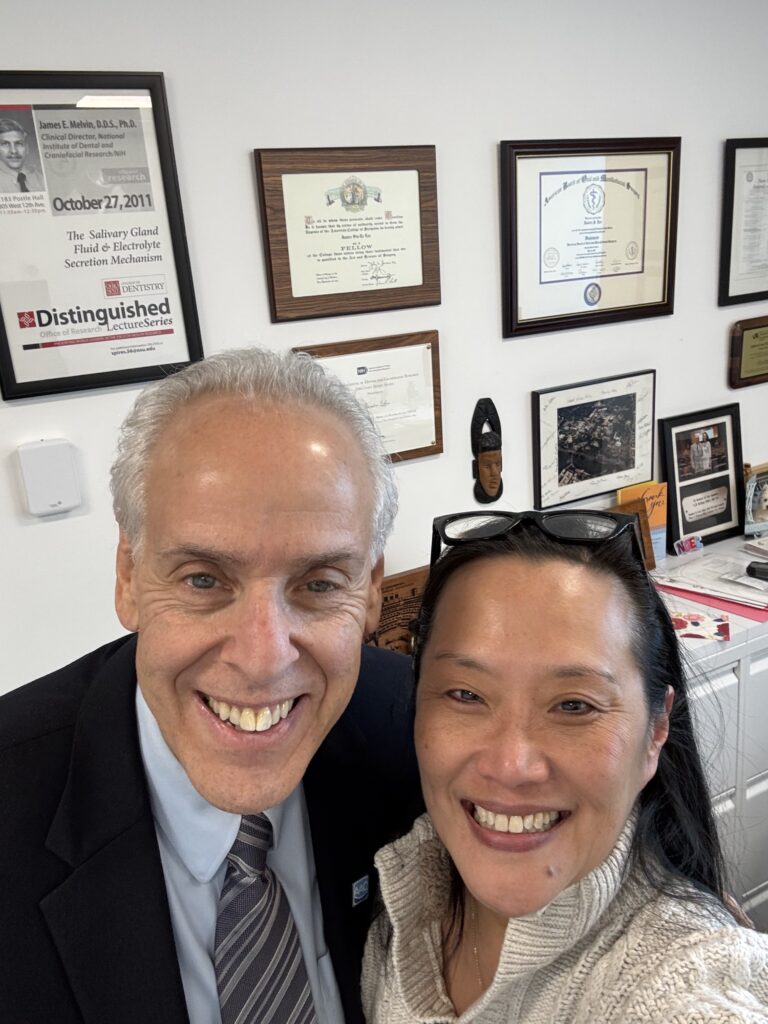
Following the stakeholder meeting, Dr. Siegel met separately with Dr. Janice Lee, NIDCR Clinical Director and Chief of the Craniofacial Anomalies and Regeneration Section.
Dr. Lee shared information about a pilot study examining the effects of a mandibular advancement appliance in children with sleep apnea. Their discussion also addressed ongoing questions surrounding SDB and orthodontics, the AAO’s updated white paper, and potential opportunities for public-private partnerships to support additional research.
The meetings provided an opportunity to bring orthodontists’ clinical, legislative, regulatory, and research priorities directly to federal research leadership, highlighting both the progress achieved through sustained AAO advocacy and opportunities to advance evidence-based care.