Some parts of AAO membership are easy to quantify. CE credits. Resources. Programs. Meetings.
Other kinds of value are harder to put on a spreadsheet.
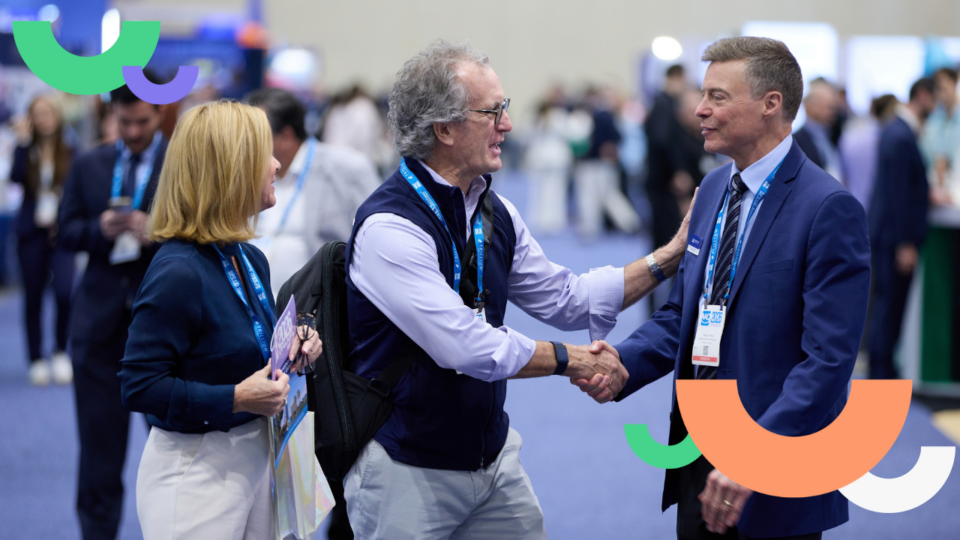
They can start with the orthodontist sitting beside you at a session who has already dealt with the staffing problem you are facing. The mentor who tells a resident what they wish they had known five years earlier. The colleague whose name comes to mind when you are working through a difficult case, considering another location, or transferring a patient across the country.
Dr. Kyla Swearingen has described that part of AAO personally: “Some of my closest friends and most influential mentors are people I met through the AAO.”
Dr. Dan Joseph has seen those relationships become useful in ways that extend directly into practice.
“Through AAO meetings, I have built relationships with orthodontists around the world. When a patient transfers, I often know the receiving orthodontist, or someone who does.”
That familiarity, he noted, can support a smoother transition and better continuity of care.
Those relationships do not form because every member practices the same way. Their value often comes from the opposite. Orthodontists bring different experiences, career stages, practice models, research interests, communities, and points of view into the same professional space.
Dr. Dale Anne Featheringham has described the value of simply having opportunities to “cross paths with a lot of orthodontists” and hear their thoughts about the profession. That exchange can expose us to challenges we have not faced yet, approaches we have not considered, and perspectives we would be unlikely to encounter within the walls of our own practices.
A lecture or webinar can deliver information. Professional community adds something different: another person who has lived the problem.
From Conversation to Contribution
That exchange does not end when a meeting does.
The same member perspective that makes an informal conversation useful also helps shape AAO’s work. Orthodontists contribute through councils, committees, task forces, governance, mentorship, and other AAO roles, bringing the realities of patient care, practice, education, and research into discussions about what the specialty needs next.
Featheringham has described AAO as member-driven, with concerns and ideas originating with orthodontists and moving through a structure designed to turn those perspectives into action.
Dr. Herb Hughes reached a similar conclusion when he took a closer look at the breadth of AAO’s work. His response was not simply that members should make greater use of available resources. He encouraged orthodontists to become involved so their voices could be heard at the local, regional, national, and international levels.
That distinction matters.
AAO is not simply a network we enter when we need something. The network itself is created by the people willing to participate in it.
A member raises an issue others are encountering but have not yet voiced. An educator contributes expertise to a program. A volunteer helps identify a challenge affecting practice. An experienced orthodontist mentors someone just beginning a career. A colleague shares a lesson learned the difficult way and saves someone else from having to learn it alone.
The result is not only stronger programs or more informed decisions. It is a professional community with accumulated experience that no individual member could reproduce independently.
Someone Took Part Before Us
Dr. Joseph put that idea into a broader perspective:
“Our profession is what it is because others took part before us.”
That is true of advocacy and leadership, but it is also true of the relationships and professional knowledge members inherit.
Someone answered the question before we knew enough to ask it. Someone volunteered to address an issue before it affected our practice. Someone welcomed a resident, mentored a younger colleague, served on a committee, or shared a perspective that eventually became part of how the profession moved forward.
And participation does not always require a title.because others took part before us. We owe the next generation the same commitment.